Our Land: a powerful documentary on the English “Right to Roam” movement
The documentary unpicks the legacy of the Norman conquest, the British aristocracy and English colonialism and how it interferes with our access to natural spaces in England.
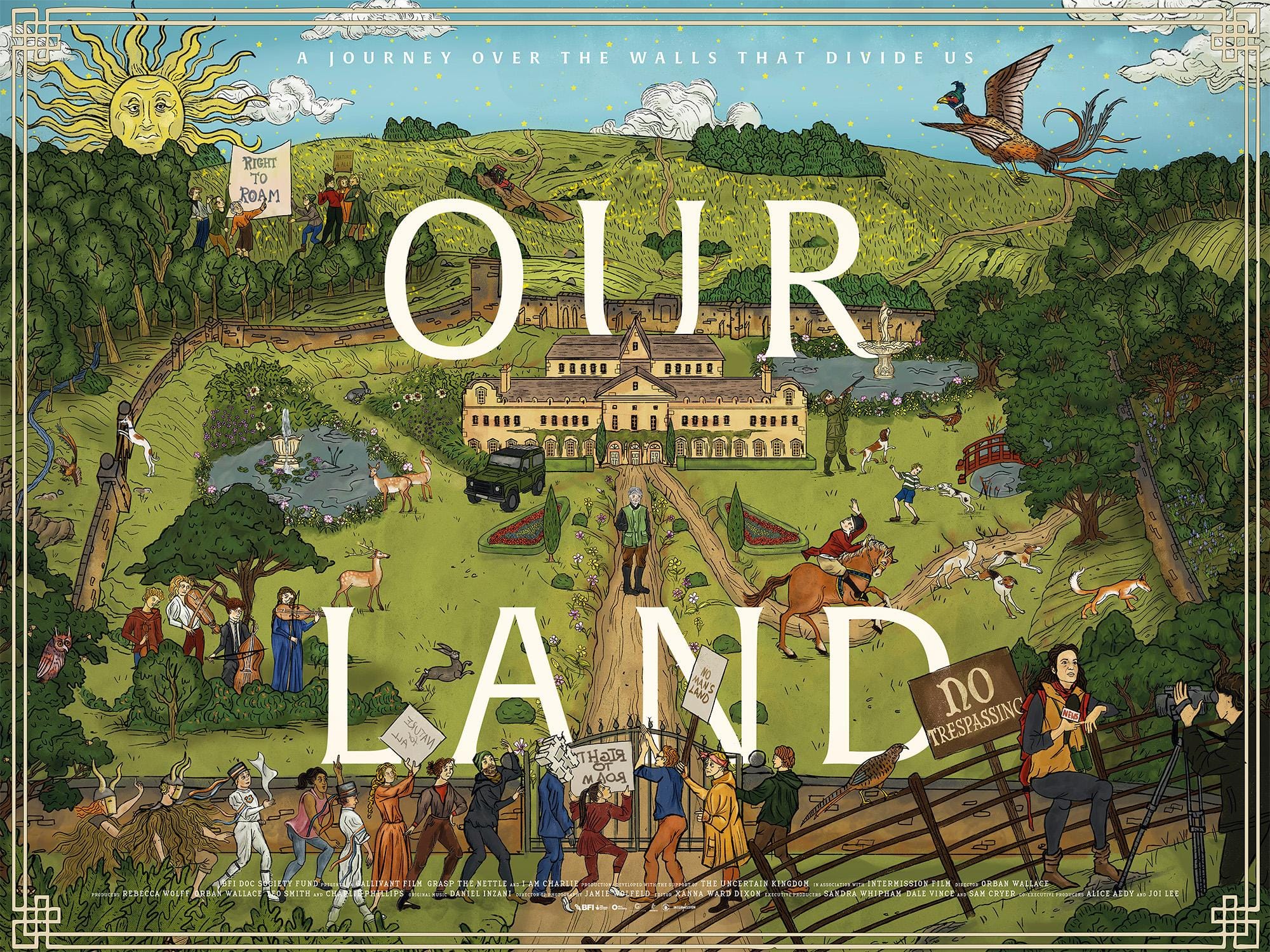
From a crusty old landowner who hails "this is my garden and it’s fucking big", to pheasant shoots where even the beaters and shooters are segregated, to the landowners interviewed, we see the Right to Roam movement petitioning for improved land access for the English public – akin to what our counterparts in Scotland have. Through various mass trespasses on estates across the country, from the Scottish borders, to Berkshire, to Devon, to Dartmoor. The documentary unpicks the legacy of the Norman conquest, the British aristocracy and English colonialism and how it interferes with our access to natural spaces in England. Only 1% of the English population owns half of all England, and 92% of land and 97% of rivers are not legally accessible to the general public.
I’ve thought a lot recently about how disconnected I am from my own culture and sense of self – it’s a topic I explored in my article on wild camping in Dartmoor, and this film captures a lot of my feelings. Undoubtedly, in my opinion, the increasing disconnect we have from our Englishness is connected to how we see our land and nature, as these things are so interwoven in our culture. Our folklore, for example, our traditional dances – these are things especially young English people are very disconnected from.
The documentary begins with an animated sequence portraying how the Norman conquest began what is now approaching a millennium of land control by the most powerful. One of my gripes with this documentary is that it doesn’t go much further than that in exploring the complexities of this parcelling of land and how it’s contributed to nature loss, but also nature-knowledge loss and cultural loss. At times the film felt it went round in circles saying the same thing but just in different locations, I think it would have been a more powerful piece if they used some of that time to delve a bit deeper into the why behind the issue when really the message was just this surface level “rich people own the land and we the common people want access” which in and of itself is a powerful message but I think there is more to it.
The film instead focuses more on the modern-day “Right to Roam” movement, with some quite powerful moments that had me truly on the verge of tears. Watching the “kinder in colour” gathering, in particular. Seeing people from all walks of life and backgrounds being able to enjoy our special landscapes in a powerful ode to the Kinder Scout Mass Trespass of 1932. And I also really resonated with Nadia Shaikh’s discussion about moving to Scotland and feeling better able to connect with nature because the fear of being told you are trespassing is gone.
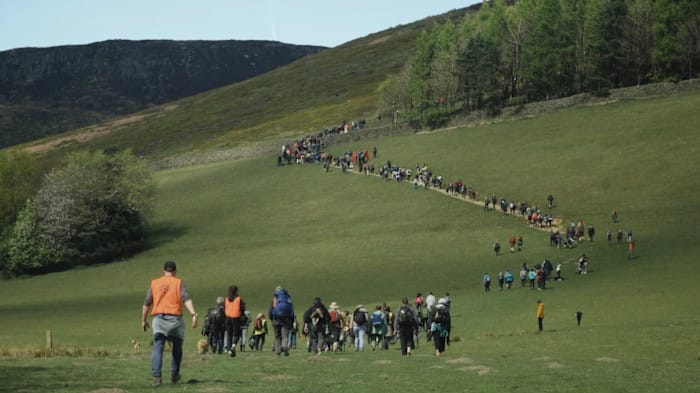
The cinematography was particularly strong in this film, able to truly showcase the beauty and power of our landscapes and bringing to life our land. From the rolling hills of the south and southwest, to the moors of Dartmoor, to the peaks of the Peak District. It’d be hard to watch this documentary and think that England is not spectacular enough to warrant caring about being able to access its nature.
All in all, a very powerful documentary highlighting an important movement that made me quite emotional. I think if you want to begin to explore what it means to be English and what it means to reconnect with nature, this is a must-watch.
You can watch Our Land at The Dukes from 05/06/26 to 11/06/2026 as part of their Green Screen series. There is also a list of screenings available on the Our Land documentary website: https://www.ourlanddocumentary.com/screenings.