Recent FHASS Staff Relocations ‘Caused Significant Harm to Staff Wellbeing’
At the end of the last academic year, it was announced that four new schools were going to be created for the Faculty of Humanities, Arts, and Social Science (also known as FHASS): these being School of Arts, School of Social Sciences, School of Global Affairs, and School of Laws– restructuring the 9 departments into 4 schools instead.
A process that aimed to strengthen and streamline the faculty, in line with the broader plans for LU Future. This new structure was developed through ‘envision’, which officially launched on 1st August 2025.
When this new departmental change was launched in the summer, FHASS staff were informed about an abrupt relocation decision made by the University Management.
English Literature staff, now part of the new School of Arts, that had offices that resided in County Main, were now placed in the LICA building with Fine Art staff. Criminology staff, now part of the School of Social Sciences, that were previously situated in Bowland North, have been placed in County South, along with many other Schools (such as the School of Global Affairs).
This envisioned move resulted in staff having little time to get things sorted before the new academic year. Lancaster University’s University and College Union (known as UCU or LUCU specifically for Lancaster) conducted a survey for FHASS staff regarding the situation, outlining the staff’s worries and the impact that move has had on them. Some staff stated that they had to cancel their annual leave due to the short timeframe.
Some of the questions that the staff were asked were about how they were feeling regarding the management’s handling of it. When asked if they felt that the communications from Faculty and the Schools about the relocation were clear and timely, 94% of the FHASS staff who took the survey answered ‘no’.
There was no consistent answer regarding when and how staff heard about the relocation– with answers ranging from rumours, staff meetings with the Faculty Executive Dean, Professor Edward Simpson, in May, and email messages.
Many of the questions focus on the staff’s mental health and worries during the relocation. 100% of those who answered the survey stated that in their experience the relocation has not been conducted in a way that takes staff’s mental health into consideration. Many stated that the move had adverse effects on them.
Some mentioned that it had negatively impacted their health conditions, ability to concentrate due to the busyness of the new workplace, and mental health, with many staff stating that they had ‘an increase of feeling stressed and anxious’.
Staff that had pre-existing mental health conditions stated that their ‘conditions had been triggered’; some experiencing anxiety, depression and stress-sensitive chronic illnesses and conditions. Insomnia from stress, panic attacks, feelings of unmotivation and being undervalued, and ongoing sadness were underlined for those who did not have any pre-existing conditions prior to the relocation.
This relocation has left many staff without their own office spaces, vacating their own, and moving into shared offices. The survey furthers this by asking if there has been confirmation for the staff’s new workplace arrangements; 67% will have their own desk in a shared office, 19% will be in an open plan office, 6% do not know what their workplace arrangements are, 5% will be hot desking, whilst only 3% will have their own office.
89% of staff have not received credible assurance that confidential data can be kept safe in their new work space, many of them worry about private meetings with colleagues or students and how they will be affected due to some not having office spaces whilst others rely on office sharing.
Whilst relocating, many staff noted the ‘lack of assistance’ and ‘lack of consideration’ as 72% answered that they felt that their belongings were not safe during the interim period between the announcement of the relocation and them moving into their new workplace.
The survey goes into more detail, stating that some answers suggested that ‘crates were too small or soiled’ and ‘there were frequent reports of items being lost or misplaced’ in their new offices. Continuing this, 58% went on to say they do not feel like their personal belongings that they need for their job will be safe.
After the survey, LUCU announced that they have ‘asked for a full restructuring of the University’s Health and Safety function’.
Additionally, they write that ‘in order to rebuild trust between staff and FHASS management, and for staff to begin the process of healing and restoring themselves from the trauma, LUCU would like to urge the Executive Dean of FHASS to consider stepping down from his role with immediate effect.’
The Pro-Chancellor, Rt Hon Alistair Burt, responded to LUCU’s email which underlined their distrust for the University Management when looking after the Health, Safety and Welfare of staff, suggesting that the FHASS relocation was ‘part of routine business’, expressing his full confidence in the University Executive.
This has recently contributed to LUCU having a vote of no confidence in the Pro-Chancellor, stating that ‘him diminishing serious and repeated warnings about the risks to the health, safety and welfare of staff caused by the FHASS relocation as “additional concerns” reflects a dangerous disconnect from workplace realities’.
SCAN spoke to one member of staff who was affected by the relocation, who told us about their experience during the moving and allocation process.
They explained that the process of moving was ‘very difficult’ and ‘dehumanising, like staff were also objects being moved around’. Similarly to the survey that LUCU conducted, they informed us that this was done on short notice, bringing around uncertainty and anxiety for staff who were asked to move ‘before they actually knew where their new office was’.
They continued to talk about the moving process, stating that there was ‘a period of 2 weeks’ where they had no office space and were ‘asked to work in a campus coffee shop’. In regards to the allocation process, they felt ‘like it was arbitrarily done on seniority’, stating that ‘some don't technically have their offices but are ‘sharing’ with people on leave who are unlikely to return’.
The conversation continued with them saying that due to the office sharing situation, ‘there’s an expectation to cooperate with each other. Are we supposed to just leave our office for each other’s meetings?’ Due to this, they said that there’s ‘no flexibility meaning that students can't just drop in’.
Mental and physical health were two things that we spoke about as there was an understanding from the survey that both were affected within FHASS staff during this time.
‘Small offices are shared between 2 people which means lots of trailing cables; some offices have had damp and leaks.’
The mental health impact has been the most noticeable change in staff, they stated that: ‘You notice colleagues suddenly going on sick leave, You hear of people within the Faculty being driven by exhaustion, stress, and working conditions to take sick leave.’
‘During a recent open day, we’re talking to prospective students, trying to convince them to come to the university. When not speaking to students, colleagues are chatting about the symptoms they're experiencing from their declining mental health.’
At the end of the conversation, they spoke about their own experience:
‘I’m filled with dread and sapped of energy walking back to the office. The weekends seem shorter. When I come into the office, I dread what new bad news I’ll receive in emails that day.’
We have reached out to the university for a comment on the matter:
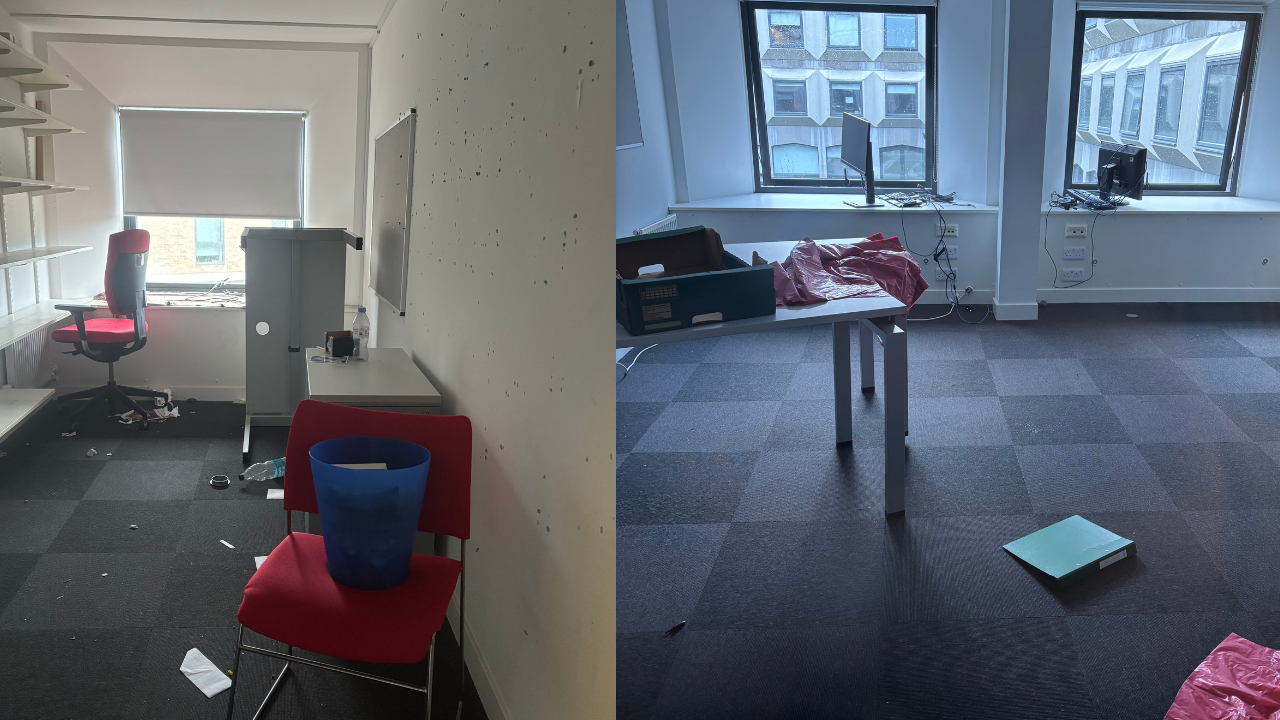
As of right now, past offices sit vacant and there is no clear approach on what will happen to them.
For those who are struggling, Samaritans is available 24/7, you can contact them by calling 116 123.
Alternatively, you can text 88247 to contact Papyrus, who are also available 24/7.