Self-determination is a sign of a civilised world
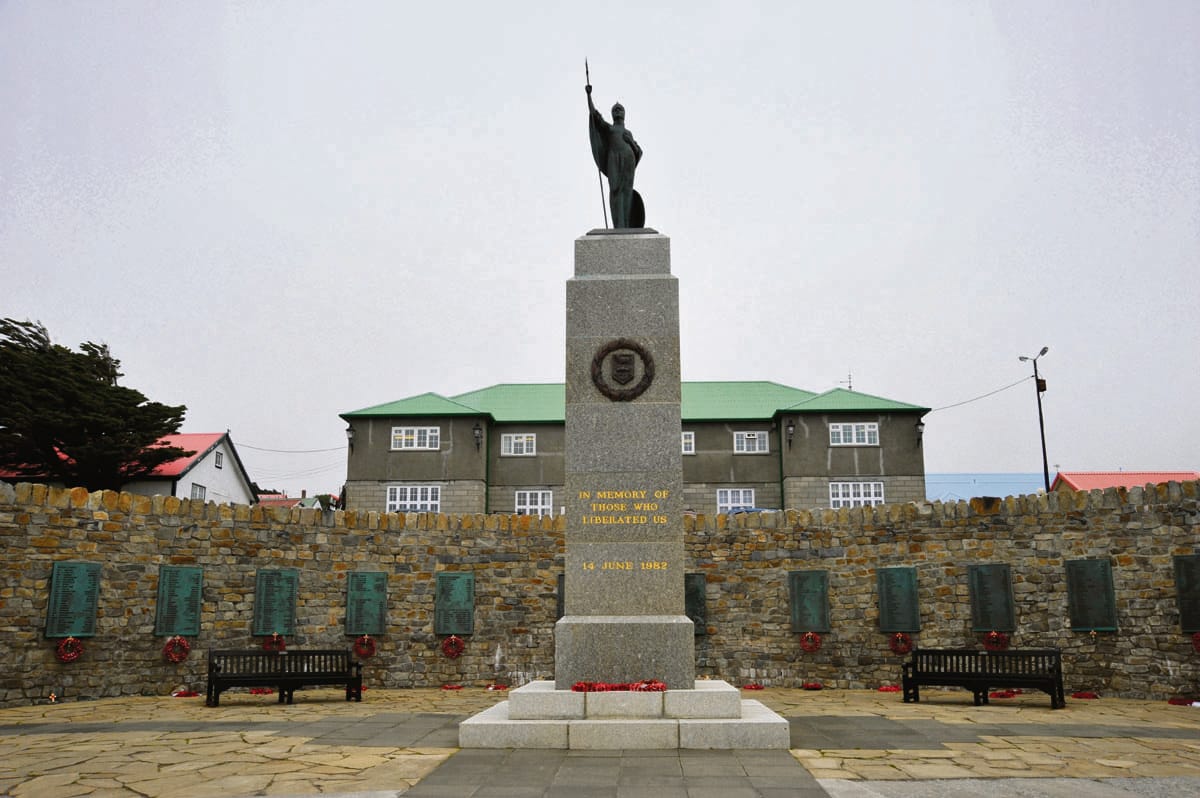
[Image unavailable - this media was lost during migration]Photo by Rod Hoad
![[Image unavailable - this media was lost during migration]](http://scan.lancastersu.co.uk/files/2012/02/6287743813_1c3834b468_o.jpg?ref=scanlancaster.co.uk)
The impending thirtieth anniversary of the Falklands War has sparked renewed bitterness between the UK and Argentina. In recent weeks, the British government has been accused of ‘having no arguments’ by Argentina’s president, Cristina Kirchner, whose unrelenting assertions of sovereignty of the Falklands undermine the essence of international law and peaceful transnational cooperation. Previous Argentine administrations have refused to take the issue of sovereignty to the International Court of Justice, the word’s chief arbiter of interstate disputes, thus inadvertently demonstrating their own acknowledgement that such a decision would result in no change to the status quo.
The emergence of ‘black gold’ in the waters around the Falklands is undoubtedly the motivation behind Kirchner’s recent display of calumny and slander. Like 1982, Argentina’s sovereignty claim is being used as a diversion from the domestic state of a country with worryingly high rates of interest and a growing fiscal deficit both contributing to an economy that has been described by as ‘a ticking time-bomb’.
This recent sabre-rattling emanating from Buenos Aires is entirely consistent with a government whose values, it appears, do not include abiding by international law. Indeed, the right to self determination is enshrined in the United Nations Charter and the recent blockade by Mercosur on ships flying the flag of the Falklands had neither legal nor political justification. This display of solidarity by Latin America should not be too concerning but it is disappointing that Brazil, having just overtaken the UK’s economy, is foregoing principled diplomacy in an attempt to strengthen its political ties with its neighbours.
In spite of Kirchner’s claims that Britain is a ‘crass, colonial power’, the present writer finds it wholly ironic that Argentina has attempted to take the ‘moral high ground’ regarding this dispute, given the fact that it was Argentina who illegally invaded the Falklands in 1982 and Argentine citizens who have been burning Union flags outside the British Embassy in Buenos Aires. One former MP – George Galloway – has disgracefully claimed that Britain should negotiate ‘some kind of joint sovereignty’ of the Islands. His claim that the legitimate owners of the Islands ‘cannot possibly be us’ is not only disproven by the fact that the population in the Falklands almost unanimously regard themselves as British. But is also an insult to the sacrifice of the 255 British servicemen who lost their lives retaking the Islands.
Whilst the anniversary will be a poignant time to reflect on the bravery and sacrifice of our servicemen who fought against and subsequently removed the illegal occupation of the Islands, it will also be a time to reaffirm the importance of international law. The right to self determination is the cornerstone of independence, freedom and is an intrinsic part of democracy, something we encourage and fight for overseas. In spite of her divisive legacy, Margaret Thatcher deserves great credit for resolutely refusing to abandon the 3,000 British citizens living in the Falklands in 1982, and made a statement to the world that the UK will not be cowed into submission, but will defend its people and their rights. The tragic loss of life to the British people and their servicemen have not been forgotten, and Kirchner’s humiliating and undignified conduct will merely strengthen our resolve.
It is an old adage that some of politics is right against left, and some of it is right against wrong – and the right of the Falkland Islanders to determine their own future is one that must be protected until they themselves decide otherwise.
Unfortunately, we have lost track of who originally wrote this article, as it did not have any author information..
Note: This post was migrated from the old SCAN website. Some formatting or media may not display correctly.