The future of contemporary dance experienced at Lancaster Arts
Over the last 2 years VERVE, a prestigious and internationally acclaimed touring company of the Northern School of Contemporary Dance in Leeds, has brought together emerging dance artists from all over the world.
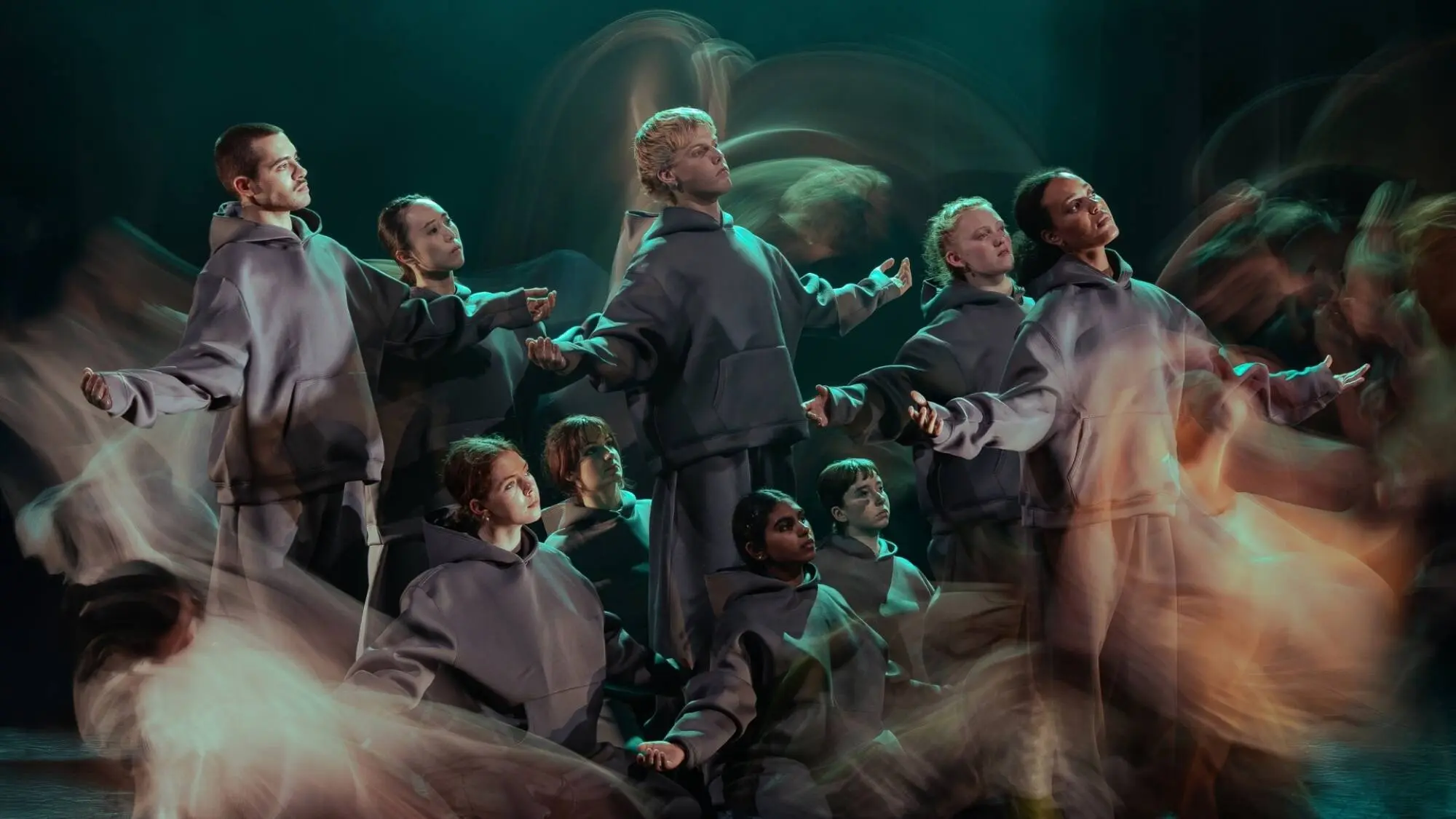
On the 24th of March, Nuffield Theatre opened its doors for the talented cast of VERVE. Over the last 2 years VERVE, a prestigious and internationally acclaimed touring company of the Northern School of Contemporary Dance (NSCD) in Leeds, has brought together emerging dance artists from all over the world.
Last Tuesday I had the honour of attending their Triple Bill, witnessing a crew of eighteen talented dancers showcase a set of groundbreaking performances. All three performances were carefully choreographed to be bold declarations of the human spirit. As my first time experiencing live contemporary dance, I was most struck by the intensity of each performance, which each spanned a range of flavours and emotions. Throughout the show’s runtime I felt entertained, I felt touched, and I felt changed from when I first walked in.
It shifts something within you, watching bodies move—experiencing bodies move.
B O D Y B E by Andrea Costanzo Martini
I was tickled by the humour in Martini’s piece, and the shifting moods of his choreography. It morphed from absurd to suggestive to unnerving with brilliant control, with rising tension throughout the piece and colourful use of the body and its movements. Dance steps seamlessly flowed from elegant to comical, and I couldn't help but admire the attention to detail in every step.
The performance began with no music and I was immediately captivated. The stage lights flash and the dancers gasp at the audience in horror. The tone shifts. They now look back at us with a coquettish grin. The expressiveness of not only the body but also the face amused me. So did the funny voices. I was particularly impressed with Sam East’s performance.
It was an excellent beginning to the show, with the dancers repeatedly shouting the phrase “We are extremely pleased that you are here!”, the audience is immediately pulled into the performances with their entire attention.
Martini explored the relationship of the viewer and the viewed, and the weird and delightful experience of having a body. Love your body, he says. Have fun! “When you’re serious, it’s all about you and your nonsense.”
The performance was playful, cheeky, and humorous. It was so very fun.
We Question. We Try. by Alethia Antonia
The second performance was another chorographical wonder. A testament to the artistic and athletic abilities of dance—the piece was moving in both the physical and emotional sense.
Antonia’s piece posed many questions and it remained intentionally unclear what setting or scene was being fleshed out in front of us. However, this did not deter the audience from creating their own meanings and interpretations—I didn’t need to fully grasp at a concrete takeaway, I was allowed to form my own answers.
The piece, unlike the other two dances, did not employ the use of voice. The dancers moved on the dimly lit stage, silent, with face masks and uniform, baggy clothes. With robotic vocals playing with the music, to me it seemed that Antonia was hinting towards a cyber dystopia.
As the piece progressed the dancers shed their symbols of conformity as they began wearing their own clothing and costumes. This distinction also marked a difference in the performances. Just as lighting played a key role in the previous piece, costume did so in this piece, evidencing the level of thought and keen interest put into its every aspect.
Through this we observed a larger narrative movement within the performance, which I believed to be a movement towards 'Peace. Love. Unity. Equality.' A dismantling of the isolated and the cynical into that of community and utopia.
Overall, the vagueness of this piece's themes left me with a space for introspection. There was an unsettled feeling in my stomach, one that needed to be felt.
Hope Hunt by Oona Doherty
Exploring the many (often toxic) facets of masculinity and the act of peacocking behaviour within groups of men, Doherty extends empathy and reaches out to these men through, what she describes as kinetic empathy. This year Doherty celebrated ten years of Hope Hunt.
The performance unofficially began during the interval, when dancers slowly started taking positions on the stage, one by one—-laying with their cheeks pressed against the floor and gold chains dangling off their necks glinting in the room lights. Even before the performance could have begun, a mood and atmosphere was already established.
The dance was confrontational, bold, exciting, and tender. Scrutinising masculine ideals, a topic that has become increasingly present since the conception of the performance, the dancers demonstrated theatrical and thespian skill to display the body and language of men. Dancers Krishna and Clara delivered a striking performance.
Chanting 'Chelsea' or barking at each other to suggest fighting over dominance and control—words and voice became important elements to the piece to create movement and rhythm.
It was a performance that I felt in my body. Wind blew in my face as the dancers ran in a circle on stage. There were bits of recorded conversations playing as well as spoken word in other languages. Emotion was conveyed even when not understood—the emotions were universal, found in the body. I found the use of speech in the performance well placed.
The show ended with one last word: “Hope”.
Curated well and highly physical, VERVE’s Triple Bill was a testament to the creative, physical, and emotional prowess of contemporary dance today. It was artistically distinct, each performance highly enjoyable and captivating in their own way. The lineup was well thought out and existed in conversation/dialogue with one another. For me it was a wonderful introduction, contemporary and experimental. I urge art enthusiasts to come experience more dance and performance, and to definitely look out for VERVE’s next tour.